How Six in Sense Came to Be

A Journey to Discover Japanese Scent
"What is a Japanese scent?"
The beginning of Six in Sense was rooted in this single question.
Cherry blossoms, yuzu, cypress, matcha.
There are many scents that evoke the image of Japan.
But are these truly the scents that Japanese people have cultivated over long periods of time?
As I spent more time living abroad and viewing Japan from the outside, I began to think anew about what Japanese fragrance really is.
My goal was not to create a scent that represents Japan, but to discover the scents that already exist within Japanese culture.
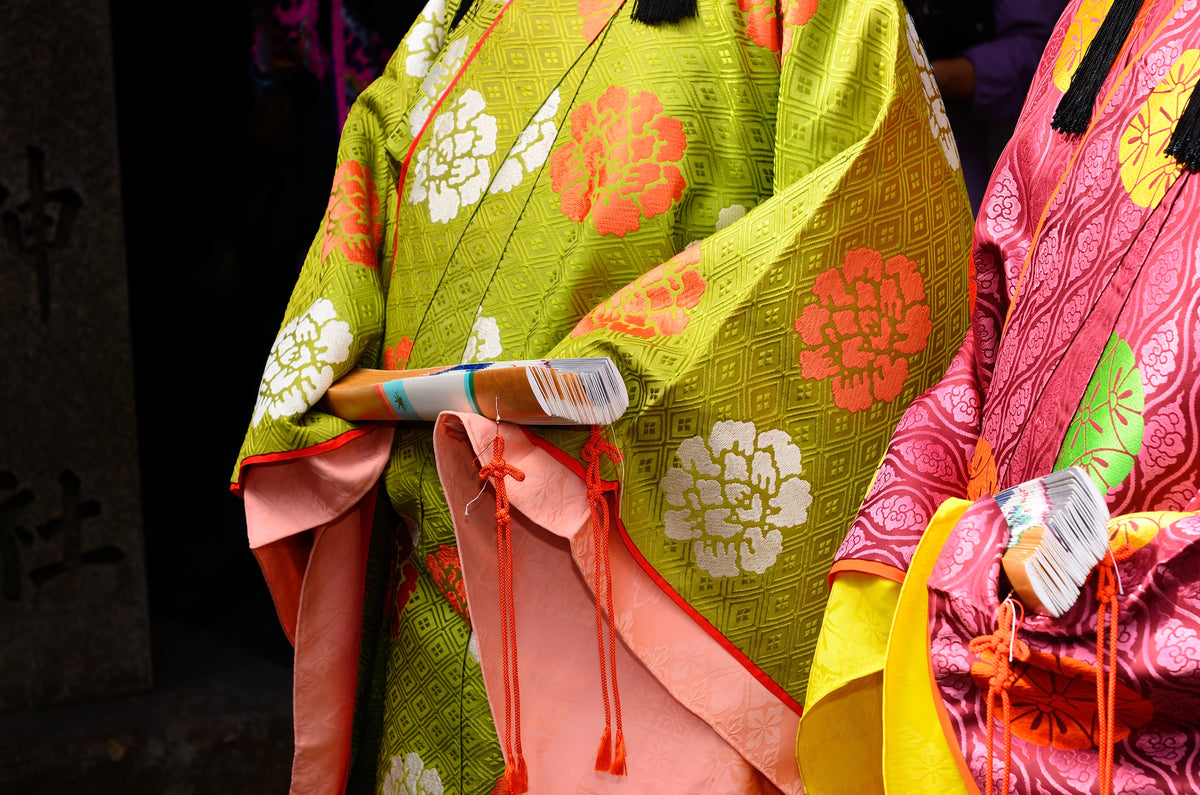
It was through this search that I encountered the "Six Types of Incense" (Rokusho no Takimono) from the Heian period.
The Cultural Power of Scent Learned Abroad

At the heart of Bridge and Blend lies an interest in the cultural and social power held by scent.
Scent requires no language.
While whether a certain scent is pleasant or not varies from person to person, the experience of a fragrance triggering a memory, or reminding one of a place or a person, is common to many.
Living abroad, I realized how deeply scent is intertwined with region and culture.
At the same time, when I tried to introduce Japanese fragrances to people overseas, I was unsure of what I should convey.
Is it enough to just use Japanese ingredients?
Should I cater to the "Japaneseness" that people abroad easily imagine?
Or should I introduce the culture of fragrance that has been passed down in Japan for generations?
This question led me to Six in Sense.
Revisiting "The Tale of Genji"
While tracing Japan's olfactory culture, I found myself confronting "The Tale of Genji" once again.
When I studied it as a student, my focus was on the character relationships and the archaic language, so I never deeply considered the descriptions of the incense.
However, upon re-reading it through the lens of scent, I saw a story completely different from the one I had known before.
The scent left behind after someone has departed.
The scent imbued into garments.
The scent transferred onto letters.
The incense that reflects the individuality of the characters.
Scent was not merely a background; it was a vital presence that drove the narrative forward.
And as I learned about the incense blending competitions (Takimono-awase) and the six types of incense described in the "Umegae" chapter, I was strongly drawn to the fact that Japan already possessed a highly sophisticated culture of perfumery a thousand years ago.
The Scents of the Six Seasons

The six types of incense consist of Baika (Plum Blossom), Kayo (Lotus Leaf), Jiju (Chamberlain), Kikka (Chrysanthemum), Rakuyo (Fallen Leaves), and Kurobo (Black Incense).
Each represents a season or a scene from nature.
The name "Six in Sense" layers two meanings: these six scents, and a sense that transcends the five human senses.
Scent is something experienced through the olfactory system, but that experience does not stop there.
Visualizing scenery from a scent.
Recalling memories.
Imagining an era one has never touched.
Becoming aware of one's current state of mind.
What scents awaken cannot be fully explained by the classification of the five visible senses.
Six in Sense is also a name for becoming aware of one's state through scent and returning to one's own self.
Reinterpretation, Not Reproduction
During development, the most important thing was not to carelessly claim that we had "faithfully reproduced the scents of a thousand years ago."
Regarding the incense of the Heian period, source materials from that era are limited, and what has been passed down to the present has come through recipes and interpretations written by later generations.
Even with scents of the same name, the formulas can vary depending on the era, the school, or the creator.
Furthermore, natural ingredients vary in scent depending on their origin and harvest season.
It is impossible to gather the same ingredients as a thousand years ago in the same condition and burn them in the same environment.
That is precisely why Six in Sense did not aim to fix past scents as a single, absolute "correct answer."
The goal was to learn from historical fragrance culture and formulas, and then reinterpret them as scents for people living in the modern world to tune their conditions and return to themselves.
It is about not just preserving old culture, but reconnecting that wisdom in a way that is meaningful to life today.
I considered that to be the role of Bridge and Blend.
Creating Scents with a Koushi (Incense Master)

The development of Six in Sense was carried out with a *koushi* (incense master) who understands traditional Japanese incense materials and blending.
We combined materials with distinct characteristics such as aloeswood, sandalwood, cloves, spikenard, shellfish incense, frankincense, benzoin, and borneol.
If the sweetness is too strong, it becomes modern and accessible, but it can lose its depth.
If one tries to be too faithful to old formulas, it can feel heavy in modern living spaces.
We adjusted the formulas time and again between tradition and modernity.
We also placed importance on ensuring that while each of the six scents possesses a unique personality, they also harmonize as a single collection.
The Reason for Using Only Powder and Water
Six in Sense does not add synthetic fragrances or essential oils to make the scent stronger or uniform.
We turn natural incense ingredients—the foundation of the scent—into powder, knead them with water, and shape them.
Scents made only with natural ingredients do not necessarily spread in an immediately clear or showy way.
Sometimes, rather than right after lighting it, it blends into the space after a while, leaving a quiet lingering note after it has vanished.
The way the scent manifests varies slightly depending on the condition of the ingredients, the temperature, and the humidity.
There are other ways to make incense if one prioritizes efficiency or uniformity.
Even so, we make them only with powder and water because we want to face not just the surface of the scent, but the ingredients themselves.
Creating Scents Around the World

Six in Sense has expanded beyond simply delivering finished products to include workshops where participants create their own scents.
Participants handle the raw materials, blend them, add water, knead them, and shape them with their own hands.
Since 2015, we have held these workshops in Tokyo, New York, Singapore, Los Angeles, and elsewhere. In 2022, we held one at JAPAN HOUSE Los Angeles, which reached full capacity shortly after the announcement.
Even without knowledge of Japanese culture, one can touch the ingredients, choose the scents, and blend them with their own senses.
Through the experience of creating a scent, the culture of a distant era transforms into one's own personal experience.
Conveying Japanese Culture in the Present Tense
Traditional culture is not something that is passed down simply by protecting it unchanged.
It is necessary to understand its background while adapting it into forms that suit modern life.
Six in Sense is not a reproduction of Heian-period incense.
It is an attempt to connect to the present day the wisdom of people from a thousand years ago who used scent to feel the seasons and turn their attention to time and their own hearts.
Perhaps Japanese scent is not the scent of a single flower or tree, but the culture itself, which has linked nature and people, seasons and memories.
Through the scents of Six in Sense, I hope you can experience that culture, become aware of your current state, and find a moment to return to yourself.