The Tale of Genji and Japanese Fragrance Culture

The Invisible Stories Told Through Scent
The Tale of Genji was written by Murasaki Shikibu, who served at the imperial court during the Heian period over a millennium ago.
Spanning 54 chapters, the story depicts various themes that continue to resonate with people across time, such as romance, family, power, aging, and loss.
One of the essential elements that enriches this tale is "scent."
In The Tale of Genji, scent is far more than mere background imagery.
It expresses the characters' individuality, conveys the presence of those unseen, and at times, stirs memories of love and parting.
Recognizing Someone Before Seeing Their Face

In the aristocratic society of the Heian period, men and women did not often meet face-to-face.
Noblewomen lived behind screens and curtains, and opportunities for men to directly see them were limited.
Because of this, clues other than sight were essential to knowing a person.
The content of a poem.
Handwriting.
The color and texture of paper.
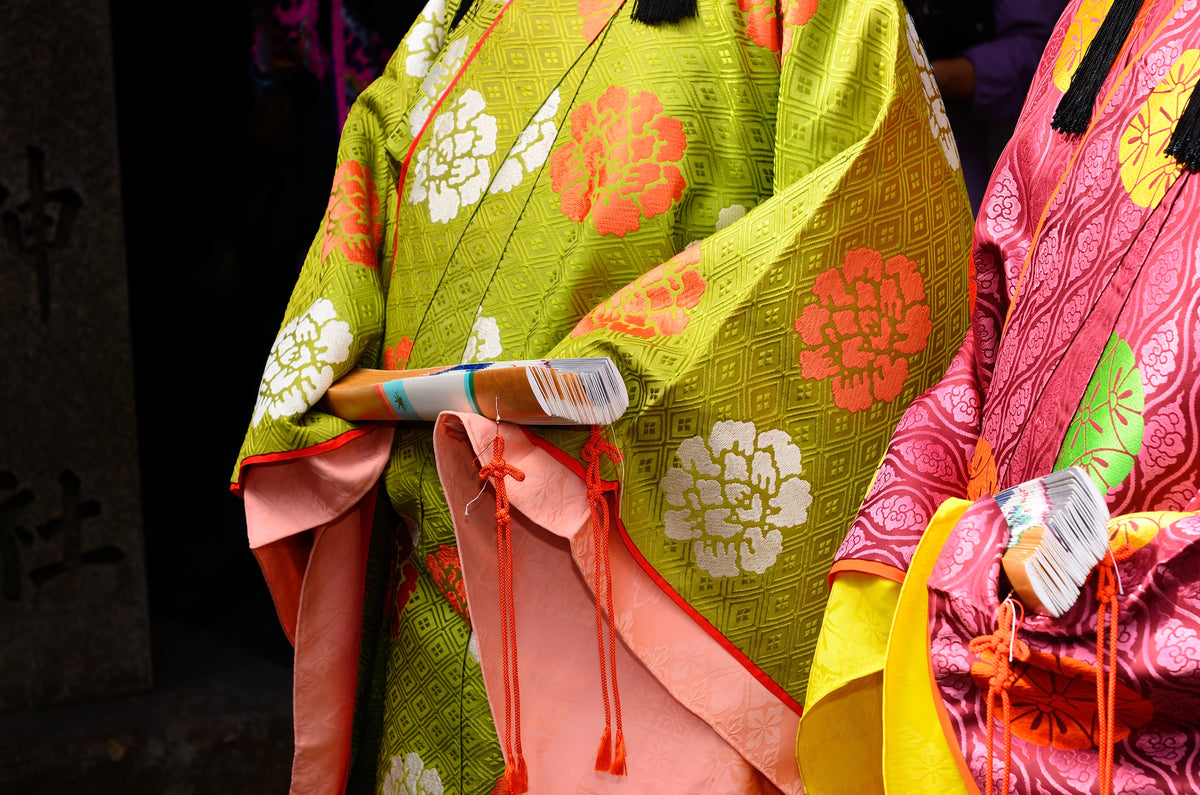
The layering of robes.
A voice.
And, scent.
Scent transferred to clothing or letters remains even after that person has departed.
Even without seeing them, one could tell who had been there by the lingering fragrance.
Scent served as an invisible mark indicating a person's presence.
Scent and Hikaru Genji
The protagonist, Hikaru Genji, is depicted as a person of excellence not only in his appearance but also in his education, music, poetry, attire, and scent.
Genji’s fragrance would linger after he left a room, making his presence felt by others.
This is not simply a description of a "man who smells good."
The ability to choose, prepare, and use scent appropriately for a given situation reflected his education and aesthetic sensibilities.
Genji's scent was a literary device that conveyed his charm and sophistication.
The Incense Competition Depicted in "Umegae"

In The Tale of Genji, Japanese incense culture is most memorably depicted in the 32nd chapter, "Umegae" (The Plum Tree Branch).
With his daughter, Lady Akashi's daughter, preparing to enter the imperial court, Hikaru Genji has the women in his life prepare incense.
Murasaki no Ue, the Lady Akashi, Hanachirusato, and the Princess Asagao each create their own blend and compete for the best result.
Even when using the same raw ingredients, each finished scent turned out differently.
These differences reflected the creators' personalities, their social standing, their feelings for the princess, and their relationships with Genji.
The incense competition was not merely a contest to determine which scent was superior; it was a cultural game where one read the characters and sentiments of others through scent.
When Fragrance Reveals What Words Cannot
In The Tale of Genji, characters' emotions are sometimes left unstated.
Instead, their hearts are implied through seasons, light, flowers, clothing, music, and scent.
A deep, composed scent.
A bright, youthful fragrance.
A cool, distant scent.
A nostalgic, unforgettable scent.
The depiction of scent conveys unspoken emotions to the reader.
Expressing the invisible through something else invisible—that is the delicate art of The Tale of Genji.
Scent Lingering on Letters

In Heian-period romance, letters and poetry played a vital role.
A letter contained not just words, but various elements including paper color, folding style, attached flowers, ink, and handwriting.
By scenting the paper, the letter became even more personal. The moment the recipient opened it, the fragrance reached them first.
Before reading the text, the person's presence and memories would already be present.
Perhaps scent was a message that arrived even faster than words.
Fragrance and Memory
Scent cannot be captured in a static form.
It is difficult to view like a photograph or reproduce precisely like music.
Yet, the moment we encounter a certain scent, we can suddenly remember people and places from the past.
The scents depicted in The Tale of Genji are also frequently tied to memory.
A beloved person.
Someone lost.
A season that has passed.
Time that can never return.
A lingering fragrance evokes the presence of someone who is not there.
This is precisely why scent was so well-suited to expressing not only the joy of love, but also loss and heartache.
A Story That Has Endured for a Thousand Years

For over a thousand years since it was written, The Tale of Genji has been passed down in various forms, including manuscripts, picture scrolls, commentaries, translations, plays, and manga.
The oldest surviving "Tale of Genji Picture Scroll" dates back to the first half of the 12th century.
However, even a picture scroll cannot depict scent.
We are left to imagine the scents of that era through the story's words and the characters' actions.
Perhaps it is that very uncertainty that makes the story of scent even richer.
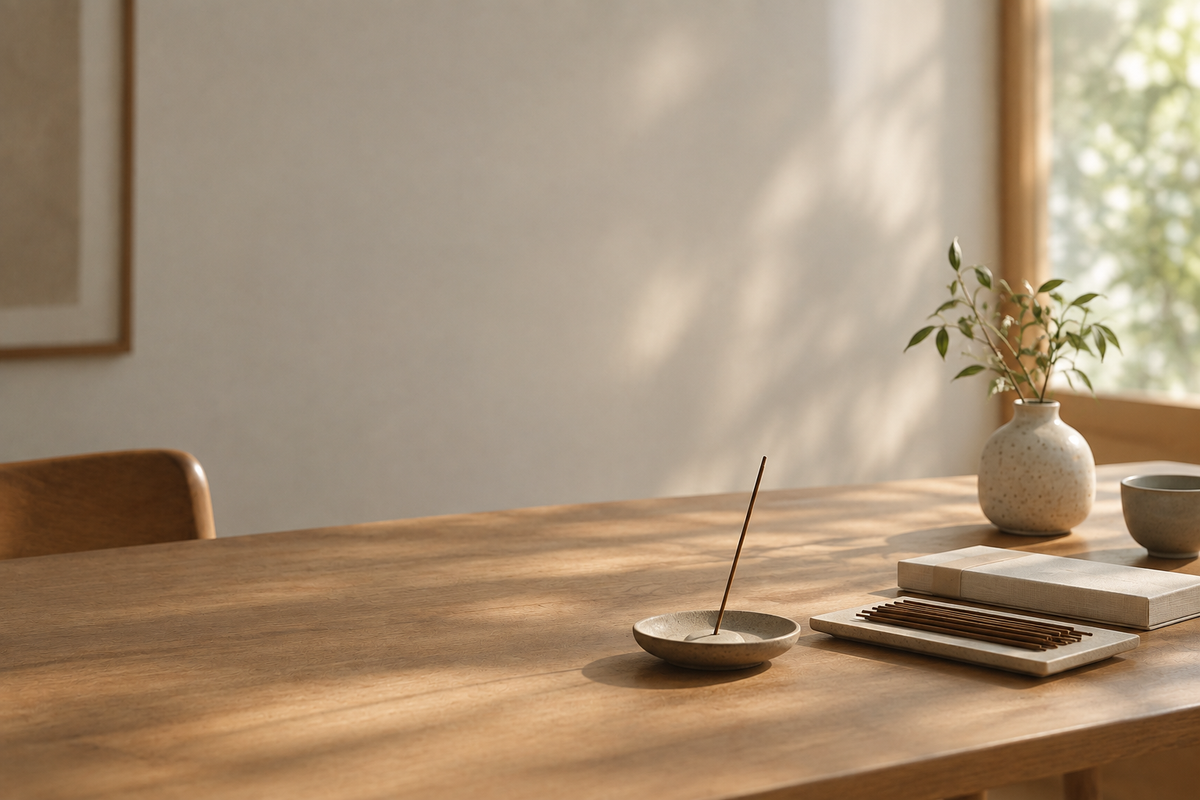
Bridge and Blend’s "Six in Sense" is inspired by the incense culture and the six classic scent blends described in The Tale of Genji.
We do not aim to provide a single "correct" scent for scenes in the story.
Just as people from a thousand years ago used scent to perceive seasons and emotions, we in the modern day can use scent to become aware of our current state and return to ourselves.
When you read The Tale of Genji while burning incense, perhaps the air that existed beyond the text will feel just a little bit closer.