Incense or Incense Sticks? Understanding the Basics to Deepen Your Appreciation of Fragrance
""Incense"" and ""incense sticks"" are both cherished for the calming atmosphere they create through fragrance. But when you're shopping for one, you may find yourself wondering: What's the difference? And which one is right for me?
In Japan, the terms are often used interchangeably, and there is no strict distinction between them. At Bridge and Blend, we use incense as a broad term that encompasses all forms of fragrant materials enjoyed through scent—much like perfume or essential oils are categories of fragrance.
From this perspective, incense sticks are simply one type of incense, alongside powdered incense (makko), kneaded incense (neri-kō), aromatic wood chips, and scented sachets.
That said, many people do distinguish between ""incense"" and ""incense sticks."" To help you better understand the rich world of Japanese fragrance, this guide explains their differences in terms of purpose, fragrance, history, and cultural background.
By the end of this article, you'll have a deeper appreciation for both traditions—and hopefully discover the style of incense that feels right for you.
Incense vs. Incense Sticks: Understanding the Basics

Although both incense and incense sticks fill a space with beautiful fragrance, they differ in their purpose, history, and cultural significance.
Let's begin by exploring their fundamental differences.
Purpose and Fragrance
The biggest distinction between incense and incense sticks lies in how they are traditionally used and the fragrance experience they offer.
Incense is commonly enjoyed for relaxation, mindfulness, refreshing the atmosphere, or creating a peaceful environment. Its fragrances are often layered and expressive, ranging from fresh woodland notes and delicate florals to warm resins and exotic spices.
Because of this diversity, incense can be chosen to match your mood—whether you're looking to unwind, regain focus, or simply create a moment of calm. Much like a room fragrance, incense transforms the atmosphere through scent.
Incense sticks, by contrast, have traditionally been associated with Buddhist rituals, memorial services, home altars, and visits to family graves. Their fragrances are generally more subtle and contemplative.
Classic materials such as sandalwood and agarwood are especially valued for their elegant, timeless aroma, creating an atmosphere of serenity and quiet reflection.
Ingredients and Craftsmanship
Incense and incense sticks also differ in the materials they use and the way they are crafted.
Incense can be made from a wide variety of natural ingredients, including aromatic woods, resins, herbs, spices, and botanicals. Depending on the style, these ingredients may be ground into powder, kneaded into fragrant blends, or left in their natural form as wood chips.
Some modern incense also incorporates essential oils or carefully blended fragrance compositions to create more contemporary scent profiles.
Traditional incense sticks, on the other hand, are typically crafted from finely powdered aromatic woods such as sandalwood and agarwood, blended with natural binding ingredients before being formed into sticks.
While the range of ingredients may be more focused, centuries of craftsmanship have refined incense sticks into an art form celebrated for their balanced, elegant, and enduring fragrance.
History and Cultural Background
The history of incense offers a fascinating glimpse into the cultural traditions of Asia.
For thousands of years, fragrant materials have been used throughout India and China for religious ceremonies, medicine, personal care, and everyday life. These traditions eventually reached Japan via the Silk Road, where incense became deeply appreciated by aristocrats, monks, and members of the imperial court.
During the Muromachi period, incense evolved beyond religious practice and became closely connected with Japanese cultural arts such as the tea ceremony, flower arrangement, and the refined appreciation of fragrance known as Kōdō—the Way of Incense. Today, it continues to be an integral part of Japanese culture.
Incense sticks are also believed to have arrived in Japan alongside the spread of Buddhism. Within Buddhist tradition, burning incense symbolizes purification, respect, and offerings to the Buddha, making incense sticks an essential part of religious practice.
Their use became especially widespread during the Kamakura period under the influence of Zen Buddhism. The familiar stick-shaped incense commonly used today is believed to have been introduced from China during the Edo period, where it gradually became part of daily Japanese life.
Burn Time and Fragrance Diffusion
Incense and incense sticks also differ in how long they burn and the way their fragrance fills a space.
Incense comes in many forms, so burn time varies depending on the type. Most varieties burn anywhere from a few minutes to around half an hour. Whether in stick, cone, or kneaded form, each offers a unique fragrance experience and atmosphere.
Many types of incense are designed to gently diffuse their fragrance throughout a room, creating a calm, immersive environment. They're perfect for moments of relaxation, reflection, or simply slowing down and enjoying the present.
Incense sticks generally burn longer—typically between 30 minutes and one hour. Their fragrance is often more focused, rising steadily with the smoke.
Traditionally used indoors, incense sticks create a peaceful atmosphere that lends itself beautifully to meditation, prayer, and quiet contemplation.
Types of Incense
Incense comes in many different forms, each offering its own unique fragrance experience.
Here are some of the most common types of incense. For a more detailed guide, please visit our article below.
Types of Incense and How to Choose Them

Stick Incense
Stick incense is the most familiar and widely enjoyed form of incense.
It is crafted by blending fragrant ingredients into a slender stick, typically offering a burn time ranging from several minutes to around half an hour. Some varieties are made around a bamboo core, while others are entirely wood-free, allowing the fragrance itself to take center stage.
One of the greatest appeals of stick incense is its versatility. With a wide variety of fragrances and styles available, it's easy to find one that suits your personal taste and daily rituals.
Because it is simple to use, stick incense is an excellent choice for beginners. Some contemporary varieties are also blended with essential oils and are enjoyed as part of aromatherapy, helping create moments of relaxation, focus, and restful living.
Cone Incense
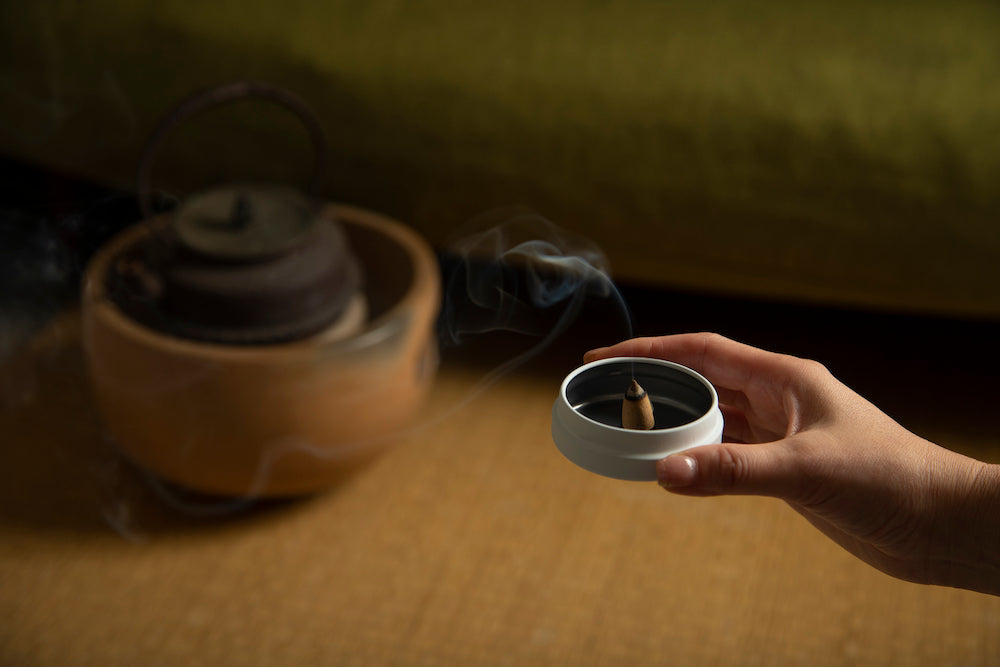
Cone incense is shaped like a small cone and is known for its rich, concentrated fragrance.
Compared with stick incense, cone incense tends to release its aroma more quickly and intensely while offering a similar burn time.
Traditionally, cone incense has been associated with purifying a space and creating a fresh atmosphere, making it an excellent choice for entryways, living rooms, or any area where you want fragrance to make an immediate impression.
Its sculptural shape also makes it a beautiful decorative object, even when not in use.
Neri-kō (Kneaded Incense)
Neri-kō is one of Japan's oldest forms of incense, created by kneading finely ground fragrant ingredients together with natural binders such as honey.
Unlike stick or cone incense, its fragrance unfolds slowly and gracefully, producing a soft, elegant aroma that lingers gently in the air.
Neri-kō is ideal for quiet moments of meditation, mindfulness, tea gatherings, or personal reflection, when a subtle fragrance is preferred over a more pronounced scent.
Its compact form also makes it easy to carry, allowing you to enjoy a familiar fragrance wherever you go.
Incense Sticks
Incense sticks have long been used in Buddhist rituals, at home altars, and during visits to family graves.
Compared with other forms of incense, they are known for their refined, understated fragrance and longer burn time, typically lasting between 30 minutes and one hour.
They are often crafted from precious aromatic woods such as sandalwood and agarwood, whose calm, elegant fragrance creates a sense of peace and stillness.
Traditionally, the rising smoke of incense sticks has also symbolized purification, making them an enduring part of Japanese spiritual practice.
How to Choose Incense

Now that you're familiar with the different types of incense, the next step is discovering the fragrance that feels right for you.
The world of incense is wonderfully diverse, and the variety of scents can feel overwhelming at first. Fortunately, once you understand a few simple principles, finding your perfect fragrance becomes an enjoyable journey of exploration.
Fragrance Families and Characteristics
Incense offers an extraordinary range of fragrance profiles.
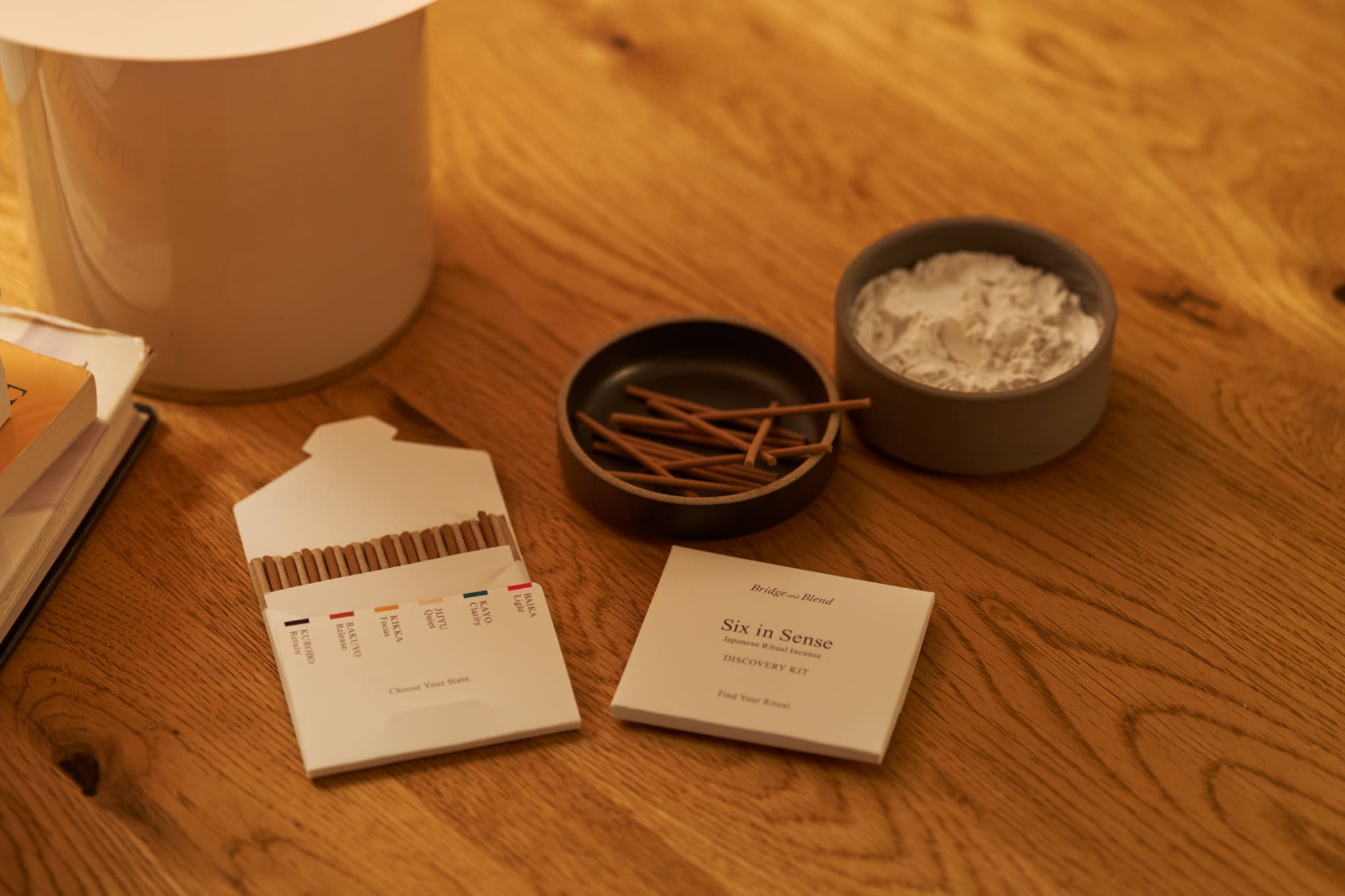
At Bridge and Blend, we often describe our fragrances as belonging to three broad styles: Traditional Japanese Incense, Aromatic, and Perfume-inspired.
In this guide, however, we approach incense as a form of home fragrance, making it easier to explore familiar fragrance families such as woody, floral, citrus, and spicy. Each family offers its own distinctive character and atmosphere.
Agarwood (Jinkō)
Agarwood is one of the world's most treasured aromatic woods, admired for its deep, rich fragrance with subtle sweetness and delicate spice.
Its grounding aroma is often chosen for meditation, mindfulness, and moments of quiet reflection.
For centuries, agarwood has also been associated with purification and creating a tranquil atmosphere.
Sandalwood (Byakudan)
Sandalwood is loved for its soft, creamy warmth and gentle sweetness.
Its comforting fragrance naturally encourages relaxation and emotional balance, making it one of the most widely appreciated ingredients in Japanese incense.
Because of its timeless elegance, sandalwood has also been traditionally used in incense for Buddhist ceremonies and memorial rituals.
Kyara (Aloeswood)
Kyara is the rarest and most prized grade of agarwood, treasured for centuries as one of the finest fragrant materials in the world.
Its fragrance is exceptionally refined—deep, smooth, subtly sweet, and remarkably complex.
Traditionally associated with inner calm and quiet contemplation, Kyara is often reserved for life's most meaningful occasions, where its extraordinary character can be fully appreciated.
Other Fragrance Families
Beyond woody fragrances, incense also comes in a wide variety of scent profiles, including bright citrus, refreshing herbal, delicate floral, and warm spicy notes.
When choosing an incense, think about the atmosphere you'd like to create, the occasion, and the fragrances you naturally gravitate toward. The perfect incense is one that complements both your space and your state of mind.
Choosing Incense for Different Occasions
Different fragrances create different moods and experiences. Here are a few suggestions to help you choose the right incense for each moment.
When You Want to Relax
For moments of relaxation, soft floral fragrances such as lavender and chamomile are wonderful choices. These calming scents are widely appreciated for helping create a peaceful, restorative atmosphere.
Woody fragrances are equally well suited to quiet moments. Notes of cedar and Japanese cypress (hinoki) evoke the feeling of walking through a tranquil forest, bringing a sense of balance and calm to your surroundings.
Recommended Fragrance | RAKUYO
When You Want to Focus
When you need greater focus and mental clarity, fresh herbal fragrances such as rosemary and peppermint can help create an energizing environment.
Bright citrus notes are another excellent choice, refreshing both the mind and the atmosphere while supporting concentration throughout the day.
When You Want to Refresh Your Space
If you'd like to create a fresh, tranquil atmosphere, woody fragrances such as agarwood and sandalwood are timeless choices.
For centuries, these precious aromatic woods have been appreciated in Japan for the sense of purity, calm, and quiet presence they bring to a space.
Fragrances such as sandalwood and frankincense are also traditionally enjoyed when creating moments of mindfulness and renewal.
Recommended Fragrance | KUROBO
Incense for Gifting
When choosing incense as a gift, elegant and universally appreciated fragrances are always a thoughtful choice.
Classics such as sandalwood, agarwood, and gentle floral notes offer a timeless appeal that suits a wide range of personal tastes.
Presentation also matters. Beautifully crafted packaging transforms incense into a memorable gift, expressing care and thoughtfulness long before the fragrance is enjoyed.
Summary | Discover the Difference Between Incense and Incense Sticks
In this guide, we've explored the differences between incense and incense sticks through their fragrance, purpose, history, craftsmanship, and cultural traditions.
While we've explained them separately to help clarify their unique characteristics, in everyday life the distinction doesn't need to be rigid.
You may wonder whether incense sticks can simply be enjoyed as everyday incense, or whether other forms of incense can be used in a traditional setting. The answer is simple:
Choose the fragrance that feels right to you.
Incense has always been a deeply personal experience. Whether you're creating a quiet morning ritual, taking a mindful pause during the day, or honoring tradition, the most meaningful fragrance is the one that resonates with you.
Both incense and incense sticks invite us to slow down, reconnect with ourselves, and appreciate the beauty of scent.
We hope this guide has helped you discover their unique qualities and inspired you to explore the rich world of Japanese incense.
Use what you've learned here as a starting point, and find the fragrance that transforms your everyday moments into something truly memorable.