A Guide to the Different Types of Incense and How to Choose the Right One
Incense Ingredients

ncense has traditionally been made from a wide variety of natural materials cherished across cultures for centuries, primarily plant-based ingredients and resins.
In recent years, synthetic fragrances have also become increasingly common. They can be used to create complex scents that are difficult to reproduce with natural ingredients alone, while also ensuring greater consistency in fragrance quality.
Each aromatic ingredient has its own distinctive character, adding depth and dimension to incense. Together, these ingredients create scents that can help us find a sense of calm and balance in many different moments of daily life. Some of the most commonly used incense ingredients are introduced below.
Natural Aromatic Ingredients
【Aromatic Woods and Resins】

Aromatic woods and resins are obtained primarily by drying the resinous or woody parts of certain trees.
Each material releases its fragrance and burns in a different way. For centuries, aromatic woods and resins have been treasured by cultures around the world and used in religious ceremonies, meditation, perfuming spaces and, at times, traditional medicine.
Agarwood, kyara and sandalwood are known for their refined, profound aromas, while benzoin, frankincense and myrrh possess distinctive, almost mystical fragrances and have long been used in religious rituals.
Agarwood (Jinkō)
Part used: Resinous wood
Origins: Vietnam, Indonesia, Malaysia, Thailand, Laos, Cambodia, Assam and Hainan Island
Aromatic profile: Distinctively sharp, depending on the variety, such as Siamese or Tani agarwood
Agarwood is traditionally regarded as one of the world’s most precious aromatic woods. It is exceptionally rare and valuable.
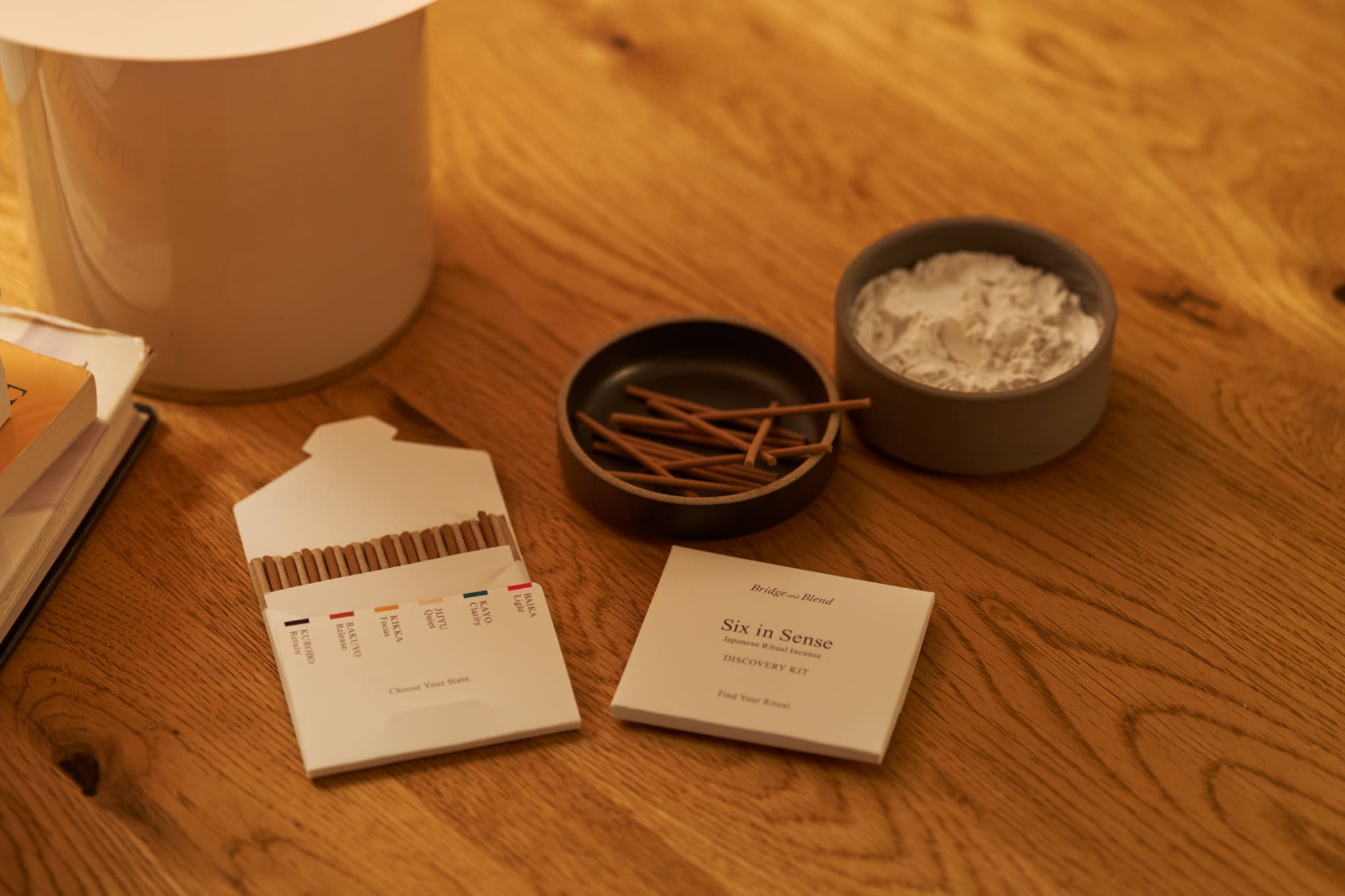
Agarwood is included in all six fragrances in Bridge and Blend’s Six in Sense collection.
Agarwood develops when an Aquilaria tree is damaged by insects, animals or disease. In response, the tree produces a protective resin that gradually permeates and transforms the wood over many years.
Agarwood is one of the most important and highly prized materials in the world of incense. Aquilaria species are listed under Appendix II of the Convention on International Trade in Endangered Species of Wild Fauna and Flora, commonly known as CITES, and their international trade is strictly regulated.
Following the Vietnam War, the liberalisation of trade and the growing demand for agarwood led to extensive harvesting without sufficient replanting for the future. Cultivation and replanting initiatives are now underway, but premium-grade agarwood remains increasingly difficult to obtain, and its value continues to rise significantly.
Although Aquilaria trees can reach maturity relatively quickly, it takes many years for resin to develop and mature into high-quality agarwood. In this respect, it may be compared to the ageing of fine wine.
In the past, richly fragrant agarwood aged for 50 or even 100 years was more readily available. Agarwood accounts for more than 20 per cent of the blend used in Six in Sense.
We use it so generously because we wish to remain faithful to the blending traditions of Japan’s Heian period. At the same time, we hope to share the story behind these precious ingredients and encourage a deeper appreciation for natural materials that are now under threat. Through incense, we seek to create a bridge between the past and the present.
Kyara
Characteristics: The highest grade of agarwood; exceptionally rare and valuable, with a uniquely profound and complex aroma
Origin: Primarily Vietnam and surrounding regions
As described above, agarwood has traditionally been classified according to its origin and quality into categories such as kyara, rakoku and manaka. Of these, kyara is considered the finest and most highly prized.
Sandalwood (Byakudan)
Part used: Heartwood from the trunk and roots
Origins: India, Indonesia, Australia and the Pacific region
Aromatic profile: Sweet, classic and elegant
Sandalwood is revered as a sacred wood and has long been widely used in Buddhist traditions.
For those who grew up in Japan, its aroma may be one of the most familiar scents associated with incense. Those with an interest in perfumery will probably recognise it by its English name, sandalwood.
Sandalwood is a semi-parasitic evergreen tree belonging to the Santalaceae family. Its pale yellow heartwood, found in the trunk and roots, is used as an aromatic material.
In addition to serving as a central ingredient in many blended incenses, sandalwood has traditionally been used to make Buddhist statues, decorative carvings, folding fans and prayer beads because of its fragrance and natural insect-repellent properties. Sandalwood objects are also said to be preserved among the treasures of the Shōsōin Repository in Nara.
It is said to take at least 30 years for high-quality sandalwood to mature. Sandalwood from Mysore in southern India is considered among the finest and is known in Japan as rōzan byakudan.
Borneol (Ryūnō)
Part used: Crystalline deposits formed within the borneol tree
Origins: Indonesia, particularly Borneo, and Malaysia
Aromatic profile: Fresh, cooling and elegant
Natural borneol is obtained from Dryobalanops aromatica, a towering evergreen tree in the Dipterocarpaceae family. These trees can grow up to 50 metres tall, with trunks more than one metre in diameter. The borneol forms as colourless, translucent crystals in cavities and fissures within the heartwood.
Because of its insect-repellent and preservative qualities, borneol has traditionally been used in incense made to protect clothing and other treasured belongings.
Its fresh, penetrating aroma may be reminiscent of the traditional moth repellents once commonly used in Japanese storage chests.
Frankincense (Nyūkō)
Part used: Resin
Origins: Oman, Somalia and other regions of the Middle East and northeastern Africa
Aromatic profile: Fresh, elegant, deep and subtly sweet
Frankincense has a distinctive sweet aroma and has been used as an aromatic material since the time of ancient Egypt.
It is the resin of evergreen trees belonging to the genus Boswellia. The bark is carefully cut, allowing a gummy sap to emerge and harden before it is collected and dried.
As the resin seeps from the tree, its colour changes from translucent to milky white. The Japanese name nyūkō, meaning “milk incense,” is said to derive from its resemblance to drops of milk.
Although frankincense is less familiar as an incense ingredient in Japan, it has been used in Western religious ceremonies since ancient times. It was one of the three gifts presented by the Magi at the birth of Jesus Christ.
As a symbol of sacred worship and purification, frankincense continues to be burned during church services.
It is also a widely used ingredient in perfumery.
Benzoin (Ansokukō)
Part used: Resin Origins: Thailand, Indonesia, Malaysia and other parts of Asia
Aromatic profile: Rich, intensely sweet and reminiscent of vanilla
Benzoin is a resin obtained from evergreen trees of the Styracaceae family, native to Southeast Asia, including the Malay Peninsula.
The bark is cut to release a yellowish sap, which gathers and hardens into resinous pieces.
Several theories exist regarding the origin of its Japanese name, ansokukō. One associates it with an aroma believed to calm the breath and bring tranquillity. Another links it to the historical region of Anxi, from which the aromatic material was once thought to have originated.
Benzoin is also used in flavouring to add warm, vanilla-like notes to foods.
Myrrh (Mokuyaku)
Part used: Resin
Origin: Somalia and neighbouring regions
Aromatic profile: Bitter, warm and resinous
Myrrh is produced by drying the resin secreted by trees of the genus Commiphora.
Its aroma has a distinctive bitterness, and it has traditionally been used both as a preservative and in medicine.
【Spices】
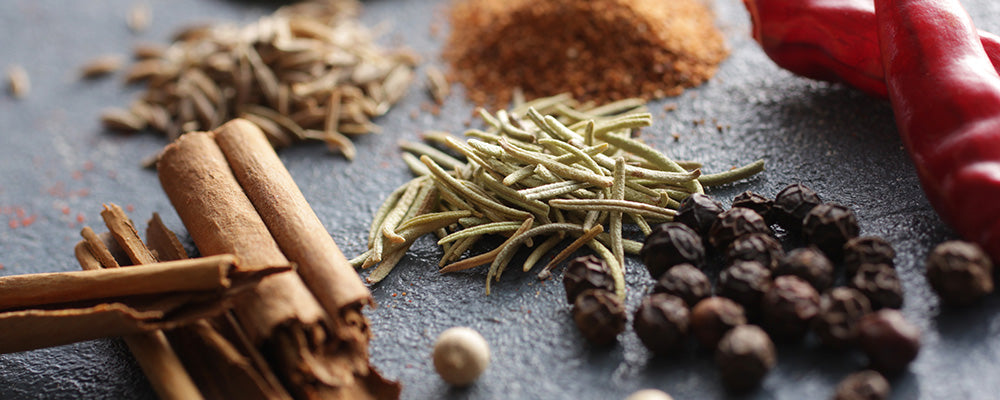
Spices such as cinnamon, clove and star anise each possess a complex and multifaceted aromatic character. Together, they are generally distinguished by their warm and subtly sweet aromas.
Clove (Chōji)
Part used: Flower buds
Origins: India, Malaysia, Indonesia and East Africa
Aromatic profile: Pungent, spicy and sweet
Cloves are the aromatic flower buds of an evergreen tree in the Myrtaceae family. The flowers have numerous stamens and release a powerful fragrance.
The Japanese name chōji, meaning “nail-shaped,” refers to the appearance of the unopened flower buds after they have been dried.
Clove is one of the world’s most familiar spices and is widely used in cooking. It has also traditionally been valued for its preservative properties and used to support digestion.
Cloves were known in ancient Greece and China, and examples have also been preserved among the treasures of the Shōsōin Repository in Nara.
Cinnamon and Cassia (Keihi)
Part used: Bark
Origins: China, Vietnam and India
Aromatic profile: Spicy and sweet
Keihi is made from the dried bark of evergreen trees belonging to the genus Cinnamomum in the Lauraceae family.
Most people will be more familiar with it as cinnamon or cassia, spices commonly used in foods such as cinnamon rolls and yatsuhashi, a traditional Japanese confection from Kyoto.
Its aroma combines sweetness with a distinctive warmth and spiciness. The impression it creates can vary considerably depending on how it is blended and burned as incense.
Cinnamon is believed to have been used in ancient Egypt as early as around 4000 BCE, including in preparations associated with mummification. It is thought to have reached Japan around the eighth century.
Star Anise (Daiuikyō)
Part used: Fruit Origins: China, Bhutan and India
Aromatic profile: Spicy, sweet and fresh
Star anise is the dried fruit of an evergreen tree in the Schisandraceae family.
It was introduced to Japan in the early Edo period and is therefore considered a relatively recent addition to the traditional palette of Japanese incense ingredients.
Known as hakkaku, meaning “eight angles,” because of its distinctive star-like shape, it is widely used as a spice in Chinese cuisine and curry. Star anise is also a natural source of shikimic acid, a compound used in the production of some antiviral medicines. Growing demand has led to its cultivation in China and neighbouring countries.
Its fragrance is fresh and clear, with a cooling quality reminiscent of citrus. As with cinnamon, the aromatic impression of star anise can change considerably depending on how it is blended and burned.
【Other Natural Ingredients】

Onycha (Kaikō)
Part used: Mollusc operculum
Origin: East coast of Africa
Aromatic profile: Marine and proteinaceous
Onycha is made by grinding the operculum—the small, lid-like plate—of certain sea snails found along the east coast of Africa.
On its own, it is not considered especially fragrant. When blended with other ingredients, however, it enhances and refines the overall aroma, helps stabilise the composition and allows the fragrance to linger longer.
It therefore functions less as a primary aromatic ingredient and more as a natural fixative.
Spikenard (Kanshō)
Part used: Rhizomes and roots
Origins: China and India
Aromatic profile: Deep and sweet; particularly harmonious with agarwood
Spikenard is made from the dried rhizomes and roots of a perennial alpine plant native to the Himalayas and mountainous regions of China.
In the New Testament, Mary anoints the feet of Jesus with costly pure nard shortly before his death. Spikenard has therefore long carried sacred associations in Western tradition.
Known in English as spikenard, its precious aromatic oil has historically been highly valued.
Its aroma can be difficult to appreciate in isolation. When combined with other materials, however, it adds richness, depth and body, making it a frequently used ingredient in blended incense.
Patchouli Herb (Kakkō)
Parts used: Leaves and stems
Origins: India, Malaysia, Taiwan and China
Aromatic profile: Fresh and subtly sweet
Kakkō is made from the dried leaves and stems of an aromatic perennial in the mint family.
Compared with patchouli essential oil, its aroma is less bitter and more restrained. It also helps bring out the character of other ingredients when used in an incense blend.
It has traditionally been used in herbal preparations, including remedies associated with digestive discomfort and cold symptoms.
Patchouli is also widely used in perfumery, where it is valued for its deep and exotic character. In incense, however, its aroma may also recall the distinctly Japanese scent of ink being ground on an inkstone.
Turmeric (Ukon)
Part used: Rhizome
Origins: Southern China, India and Taiwan
Aromatic profile: Strong and spicy
Turmeric is the rhizome of a perennial plant belonging to the ginger family and the genus Curcuma. The variety traditionally used in Japanese incense is associated with autumn-flowering turmeric.
The genus Curcuma includes numerous closely related species and varieties, which are often difficult to distinguish.
Known in English as turmeric, it is also familiar as one of the principal spices used in curry powder.
During Japan’s Heian period, turmeric was valued as one of the five important aromatic ingredients known collectively as the gokō.
【Herbs, Flowers and Woods】
Incense may also incorporate herbs commonly used in aromatherapy, such as lavender, chamomile and rosemary, which are valued for their calming qualities.
Floral ingredients range from the rich, sweet aromas of jasmine and rose to the enduringly popular fragrance of osmanthus. Native Japanese woods, including hinoki cypress and cedar, are also used to bring their distinctive natural character to incense.
【Essential Oils】
Essential oils are concentrated aromatic extracts obtained from herbs, flowers and other botanical materials. Oils such as lavender, rosemary and bergamot are used in some types of incense for their aromatherapeutic qualities and to create a calming atmosphere.
Synthetic Fragrance Materials
In recent years, synthetic fragrance materials have become increasingly common alongside natural aromatic ingredients.
They can recreate scents found in nature, produce entirely new aromatic expressions and achieve complex fragrance profiles that may be difficult to create using natural materials alone. They can also help maintain consistency from one production batch to another.
Synthetic fragrance materials contribute to incense production in several ways, including affordability, a more stable supply and greater creative variety. Their quality, safety and environmental impact vary depending on the individual substance, its formulation and how it is produced and used.
Three Reasons Synthetic Fragrance Materials Are Used
Affordability: Natural aromatic materials can be costly. Synthetic alternatives can therefore make it possible to produce incense at a more accessible price.
Consistent supply: The availability and quality of natural materials may fluctuate according to climate, growing conditions and harvest volumes. Synthetic materials can generally be produced more consistently and at scale.
A wider variety of scents: Synthetic fragrance materials can recreate complex aromas that are difficult to achieve with natural ingredients alone, as well as create entirely new fragrance profiles.
Some incense products may also contain synthetic binders or resins. Depending on their formulation, these materials can affect burning time and how long the fragrance lingers.
Borneol offers one example of the challenges surrounding the supply of natural aromatic materials. Natural borneol is available only in limited quantities, and much of the borneol used today is produced by refining camphor obtained from camphor trees or through other manufacturing processes.
Bridge and Blend remains faithful to aromatic formulations inspired by those of Japan’s Heian period and uses 100% natural ingredients.
However, the increasing scarcity of materials such as natural agarwood and borneol, together with regulations governing the international trade of endangered species, may make them even more difficult to obtain in the future.
As we consider how to preserve this heritage for generations to come, it may become necessary to explore responsibly created alternatives that balance tradition, quality and respect for the natural environment.
Types of Incense

To learn more about the different types of incense, their benefits and how to incorporate them into your daily life, please explore our guide below.
Conclusion
Incense has become a much-loved part of time spent at home, bringing a sense of comfort, calm and quiet restoration to everyday life.
With so many varieties now available, choosing the right incense can feel overwhelming—not only for those discovering it for the first time, but even for experienced incense enthusiasts.
A helpful place to begin is with practical considerations: the type and form of the incense, its burning time, how widely the fragrance travels, where it will be burned and how easy it is to clean up afterwards.
You may also wish to choose according to the character of the fragrance, the season, the concept behind the blend, the traditional qualities associated with its ingredients, your present state of mind or how you would like to feel.
If you are choosing by aromatic character, a traditional incense rich in agarwood offers a refined and luxurious fragrance, making it a beautiful choice when welcoming guests.
The profound, contemplative aroma of sandalwood, reminiscent of the incense found in Japanese temples, can create a sense of stillness and help prepare the mind for moments that require concentration, such as reading.
For a more contemporary and elegant atmosphere, an aromatic or perfume-inspired incense may be particularly appealing.
Even when the same ingredients are used, the character of an incense can feel lighter or deeper depending on the blend. A light, gentle fragrance is easy to enjoy every day and offers an approachable introduction for those new to incense.
Deeper fragrances create a richer atmosphere, evoking the feeling of being transported to a special retreat such as a traditional Japanese inn or a beautifully appointed hotel.
You may also choose incense according to the qualities traditionally associated with its aromatic ingredients and the atmosphere you wish to create—whether for relaxation, restful evenings, concentration, freshening a space or keeping insects away.
To explore these qualities in greater detail, please see the article below.
Explore the Benefits and Uses of Incense
While there are many ways to guide your choice, the best approach is often simply to trust your senses and experience the fragrances that intuitively appeal to you.
The ritual of lighting incense is itself an invitation to slow down and create a more peaceful, pleasurable space.
Whether you wish to lift your spirits or bring yourself back to calm, take a moment to connect with how you feel and discover the incense that feels right for you.